
Landscape concreting in Sydney
Concrete sits under or behind most of a landscape. We pour the paths, slabs, footings and bases a job needs, so the rest of the build has something solid to sit on.
Elysian Landscape Co. pours the concrete paths, slabs, steps and footings that a Sydney landscape sits on, as part of backyard and front yard builds across the North Shore, Inner West, Parramatta and the Hills. Because the same team builds the walls, decks and paving above, the levels and edges are set to suit them.
Paths and slabs
Side paths, entertaining slabs and bases for sheds and fire pits need the right levels and falls so water runs away from the house. We set them out and pour them to suit the finished design.
Footings and bases
Retaining walls, screening, deck posts and steps all rely on good footings. Because we build those parts too, we pour the footings to suit what goes on top.
Ready for the finish
Concrete can be the finish, or the base for paving, tiles or stone. Either way we plan it with the rest of the yard, so heights and edges line up.
From set out to cure
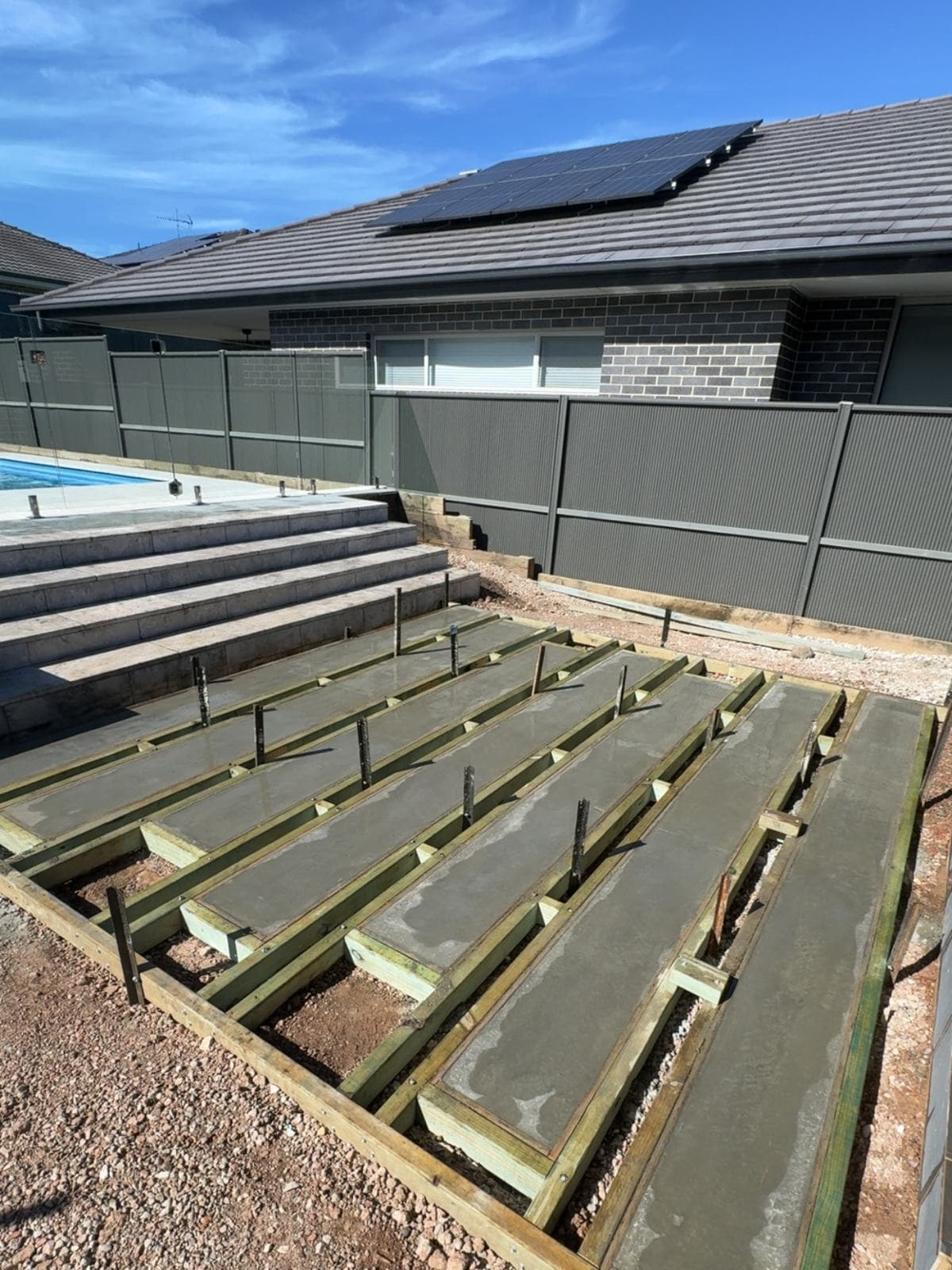
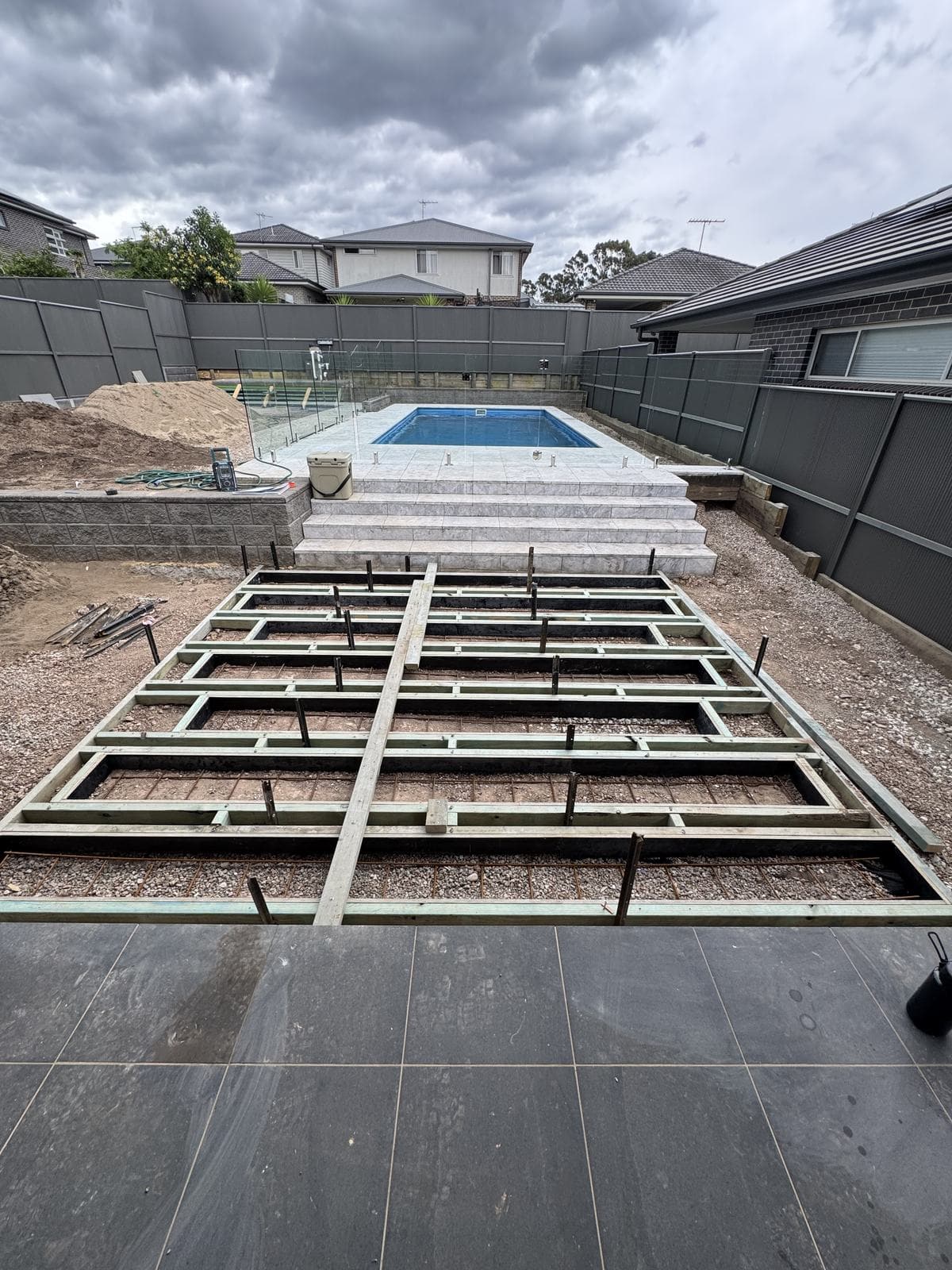
The area is set out and dug to depth, then formwork goes in to hold the edges and set the levels and falls. Reinforcing goes in where the slab or footing needs it, the concrete is poured and finished, and it is left to cure before anything is built on top.
Planning ahead
Think about what will go on the concrete later. A slab for paving and tiling sits lower than one left as the finish, and footings for retaining walls, decks and screening are sized to what they carry. Access matters too, since concrete has to be barrowed or pumped in from the street.
Weather, curing and joints
Sydney weather plays a part. On hot or windy days concrete dries out quickly, so pours are best done early and the surface kept from drying too fast, and heavy rain can push a pour back. Concrete keeps gaining strength for weeks, so it needs time before heavy loads go on it. Control joints are set in larger slabs so any shrinkage cracks follow a straight line.
What this can include
- Concrete paths
- Entertaining area slabs
- Footings for walls, decks and screens
- Bases for paving and tiling
- Concrete steps
- Slabs for sheds and fire pits
We take on smaller two to three week jobs as well as full builds. Every quote starts with a visit to the site.
Questions about concreting
How long before I can walk on new concrete?
Light foot traffic is usually fine after a day or two, depending on the weather. Heavier loads, such as cars or building on top, need longer, as concrete keeps gaining strength for several weeks.
Why does concrete crack?
Concrete shrinks a little as it dries, and movement in the ground can add to that. Control joints, the right reinforcing, a well prepared base and proper curing keep cracks small and where they are meant to be.
Does a concrete path need reinforcing?
Most paths and slabs are reinforced with steel mesh, as in the formwork photo on this page, and footings get reinforcing to suit what they carry. The ground, the load and the use decide what is needed.
Where does the water go from a new slab?
Every slab is set with a fall so water runs away from the house and into drainage, not towards the walls or onto a neighbour's land. Grated drains can be added where a slab meets the house or a doorway.
Can concrete be the finished surface?
Yes. A plain or broom finish suits side paths, shed slabs and utility areas, while a slab can also be the base for paving, tiles or stone in entertaining areas.
Related services
Paving and tiling
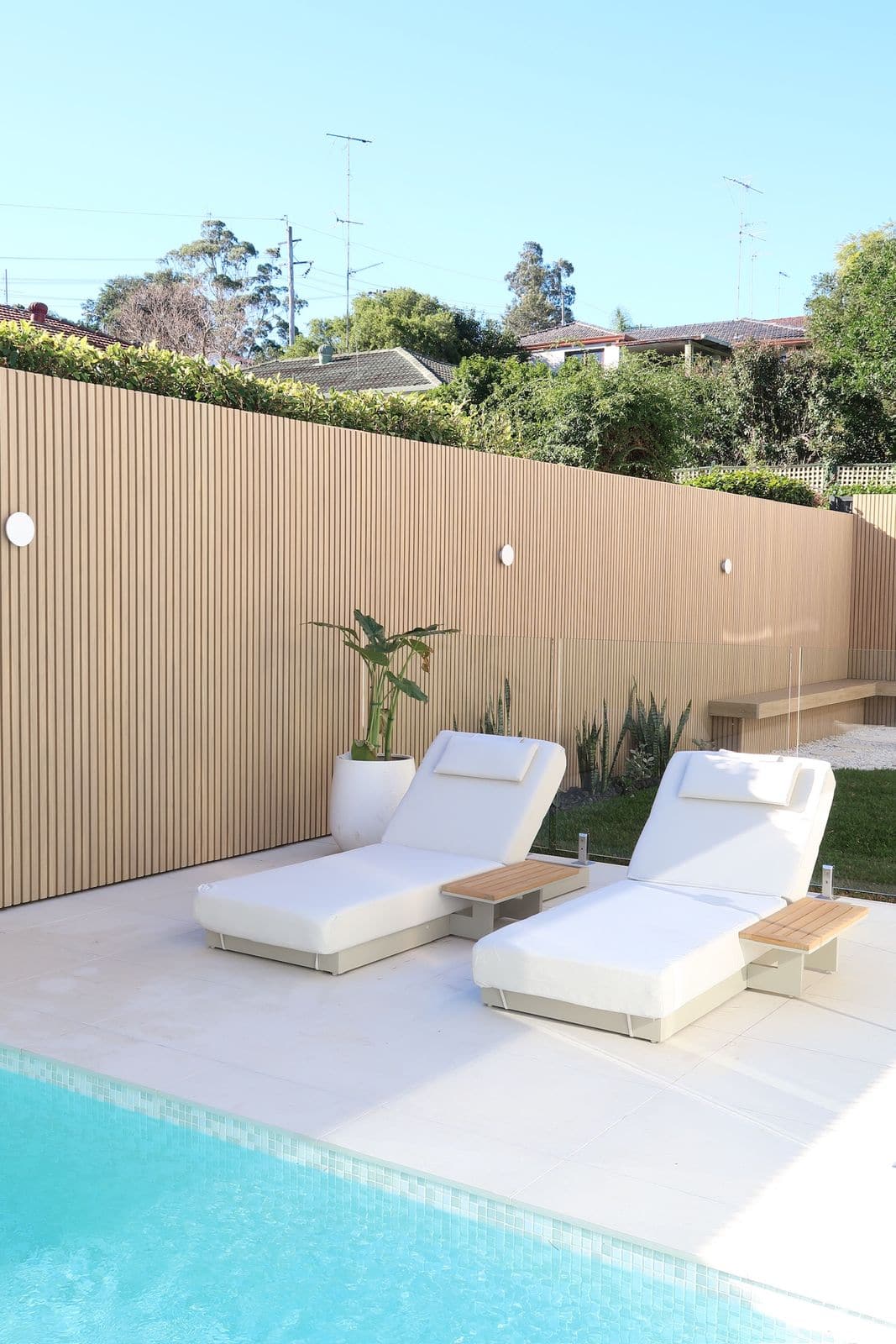
Paving, crazy paving, outdoor tiling, courtyards, paths and stepping stones.
See paving and tiling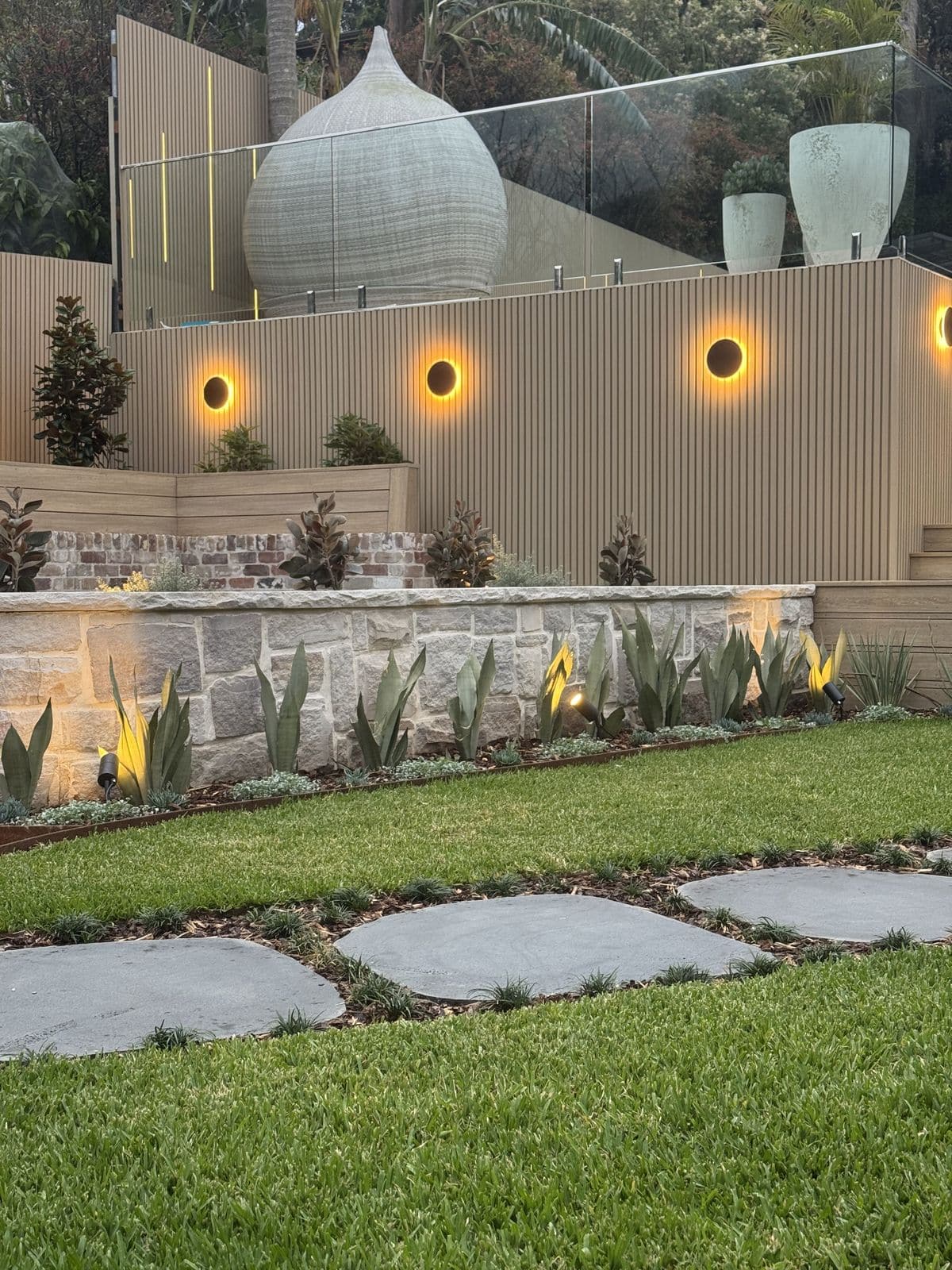
Retaining walls
Sandstone, block and steel walls that turn slopes into usable levels.
See retaining walls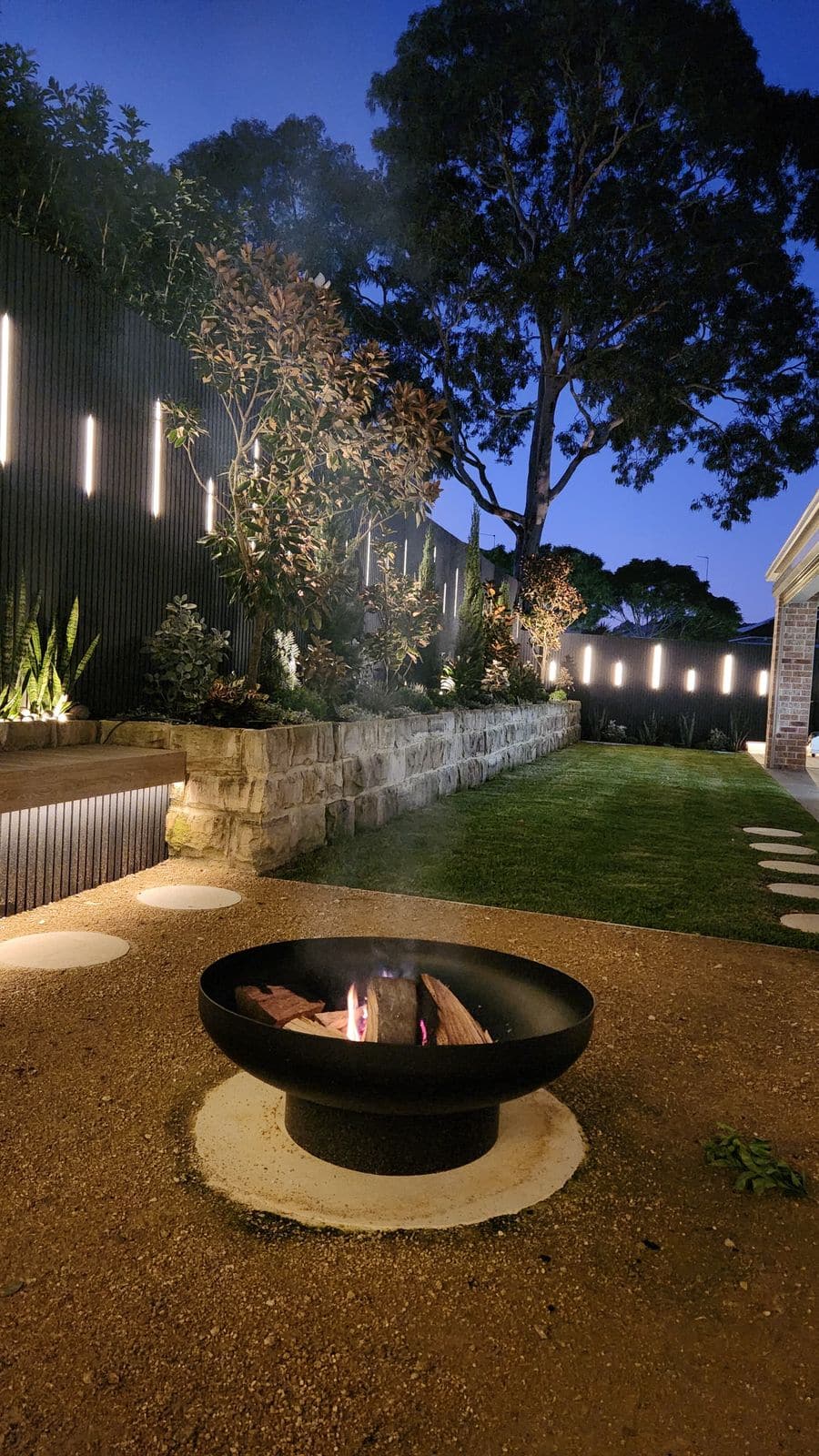
Backyard landscaping
Full backyard renovations and new builds, designed and built by one team.
See backyard landscapingTalk to us about your yard
Big build or a smaller two to three week job, we are happy to come out and take a look.